Check in
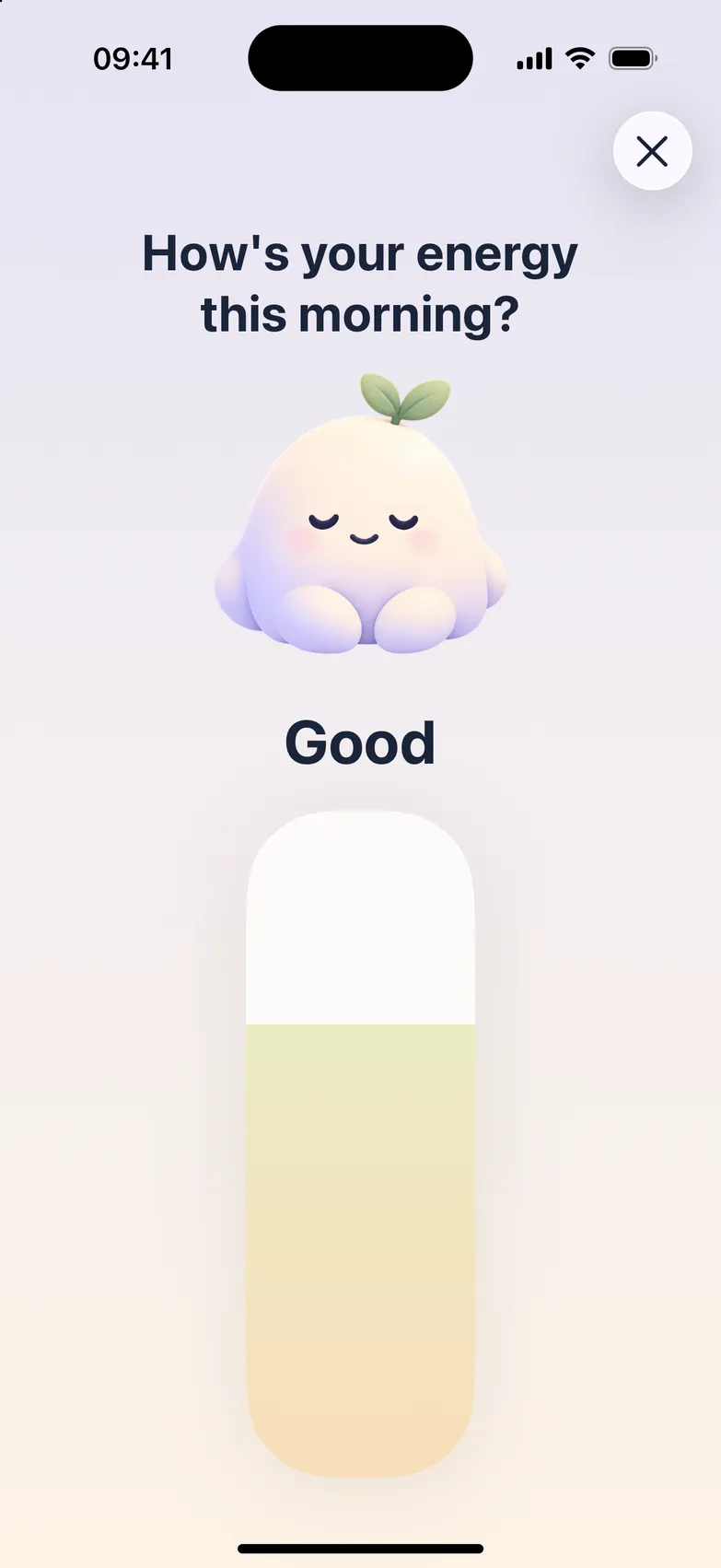
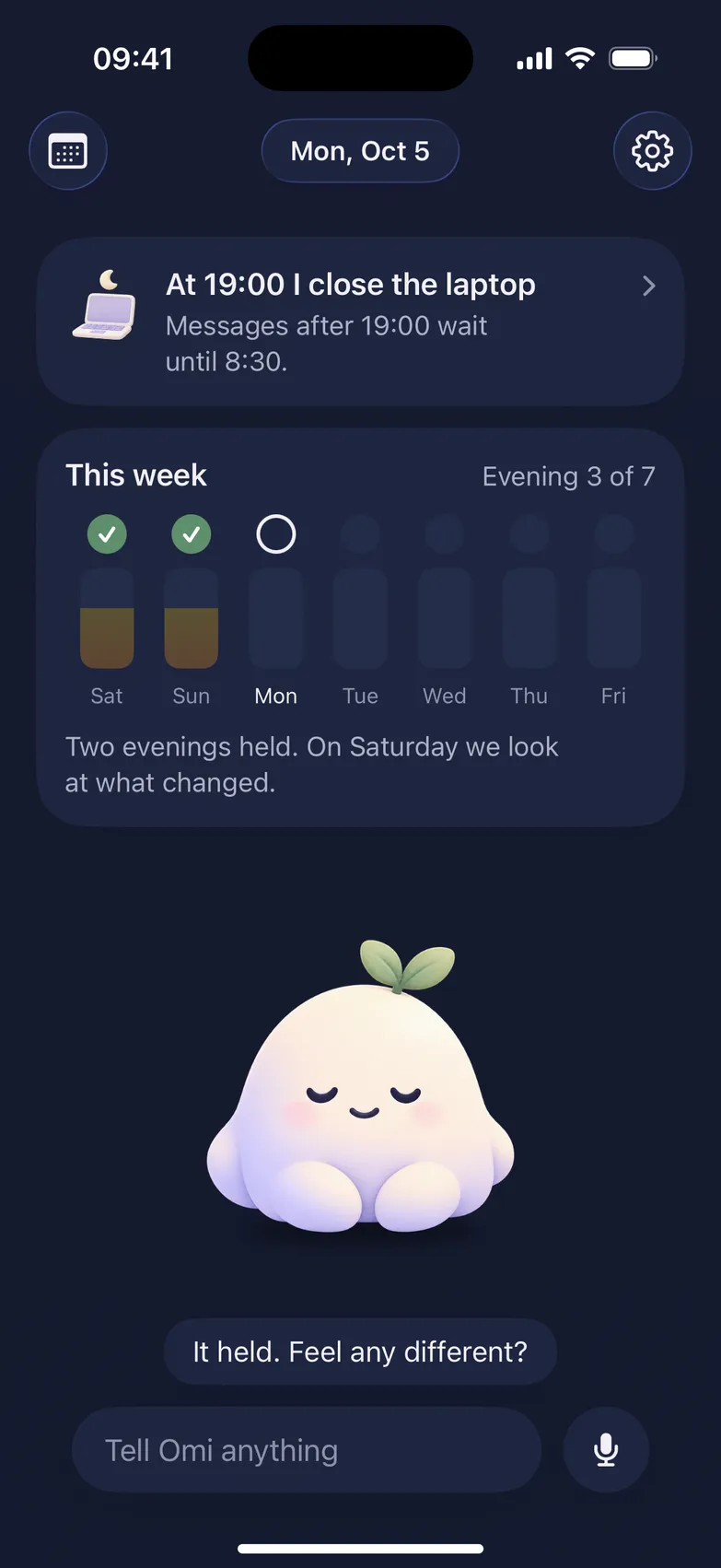
Did last night’s change hold? Then one tap for how much energy you have, which sizes what Omi asks of you today.
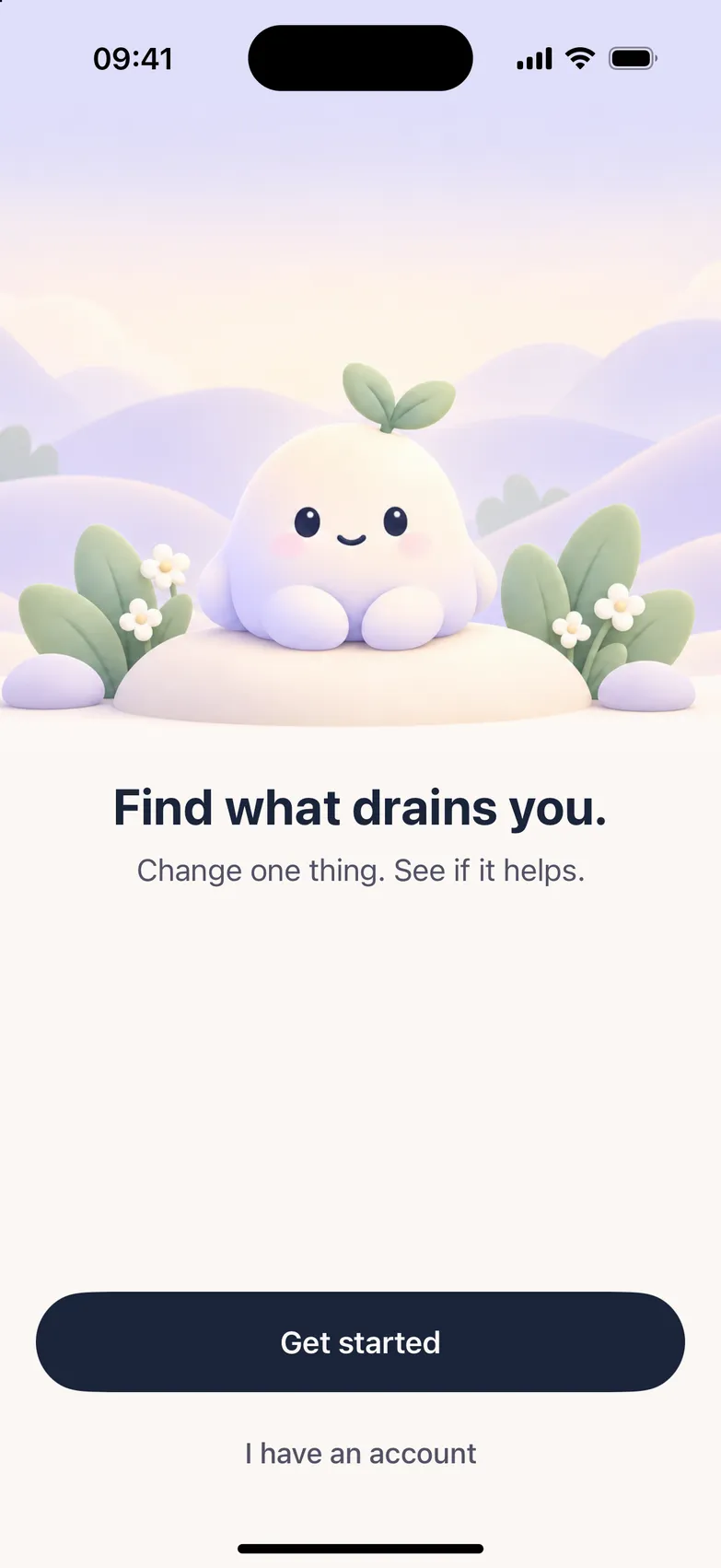
Omi helps you find what wears you out, change one small thing and see on your own mornings whether it helped. I designed and built it alone in SwiftUI, from the brief to a tested app, in three days.

The brief asked for a calm burnout companion: a daily check-in, a coach to talk to and insights over time. I could have drawn that in an afternoon, but tracking your energy and chatting about it doesn’t make anyone less burned out, so before the first screen I read what recovery actually involves.
The answer was narrower than the brief. People who recover change something real in what drains them and then check whether it helped; in one trial, reflecting on what wears you out without changing anything did worse than doing neither. Tracking only helps when it feeds back on a goal. So Omi’s unit isn’t the chat or the check-in. It’s one change at a time, checked on your own days.
Did last night’s change hold? Then one tap for how much energy you have, which sizes what Omi asks of you today.
Omi helps you say what takes the most out of you, and it lands on your map in your own words.
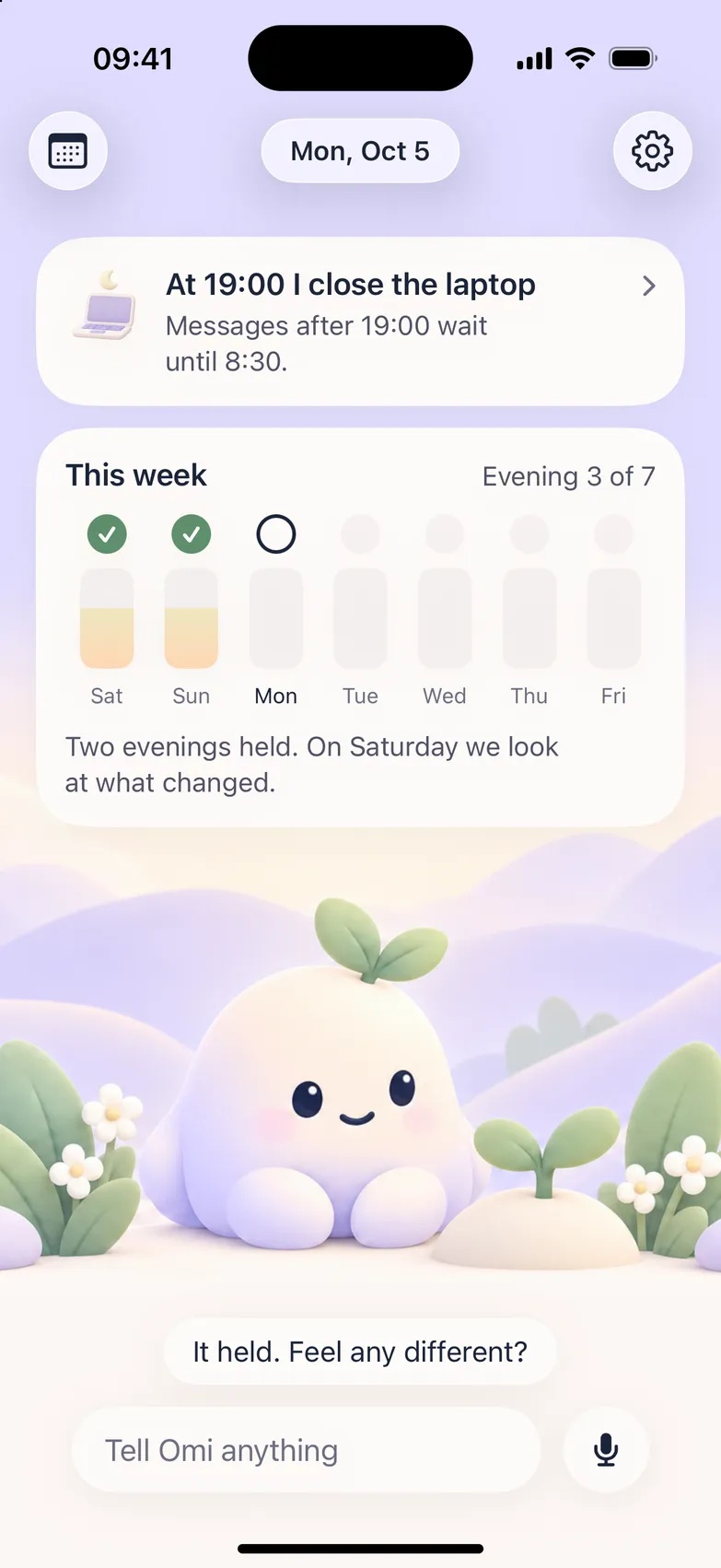
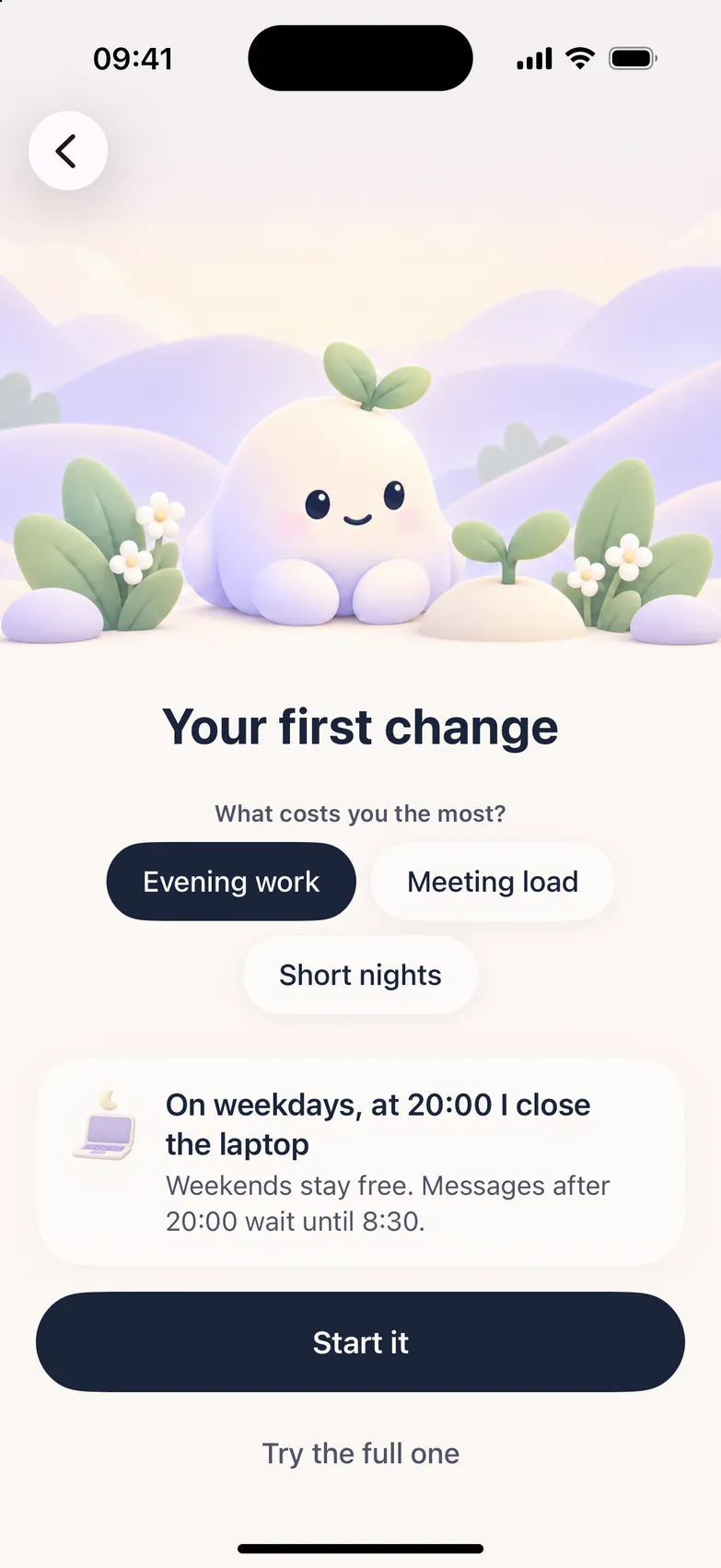
One lever on that drain, written as when and what: at 19:00 I close the laptop.
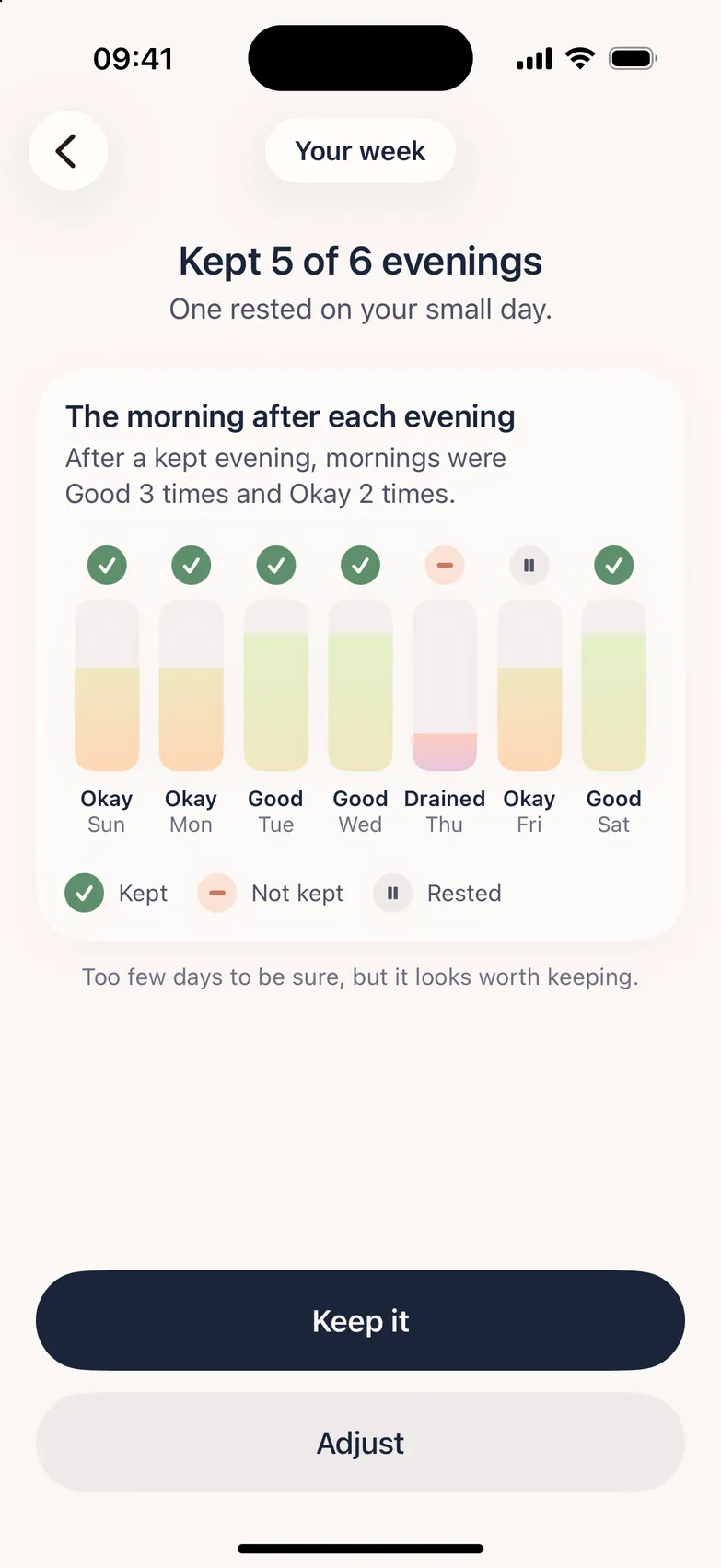
Your kept evenings sit beside the mornings after. Keep the change, make it smaller or find the next one.
Changes that worked become a plan for the early signs, written with Omi before they come back.
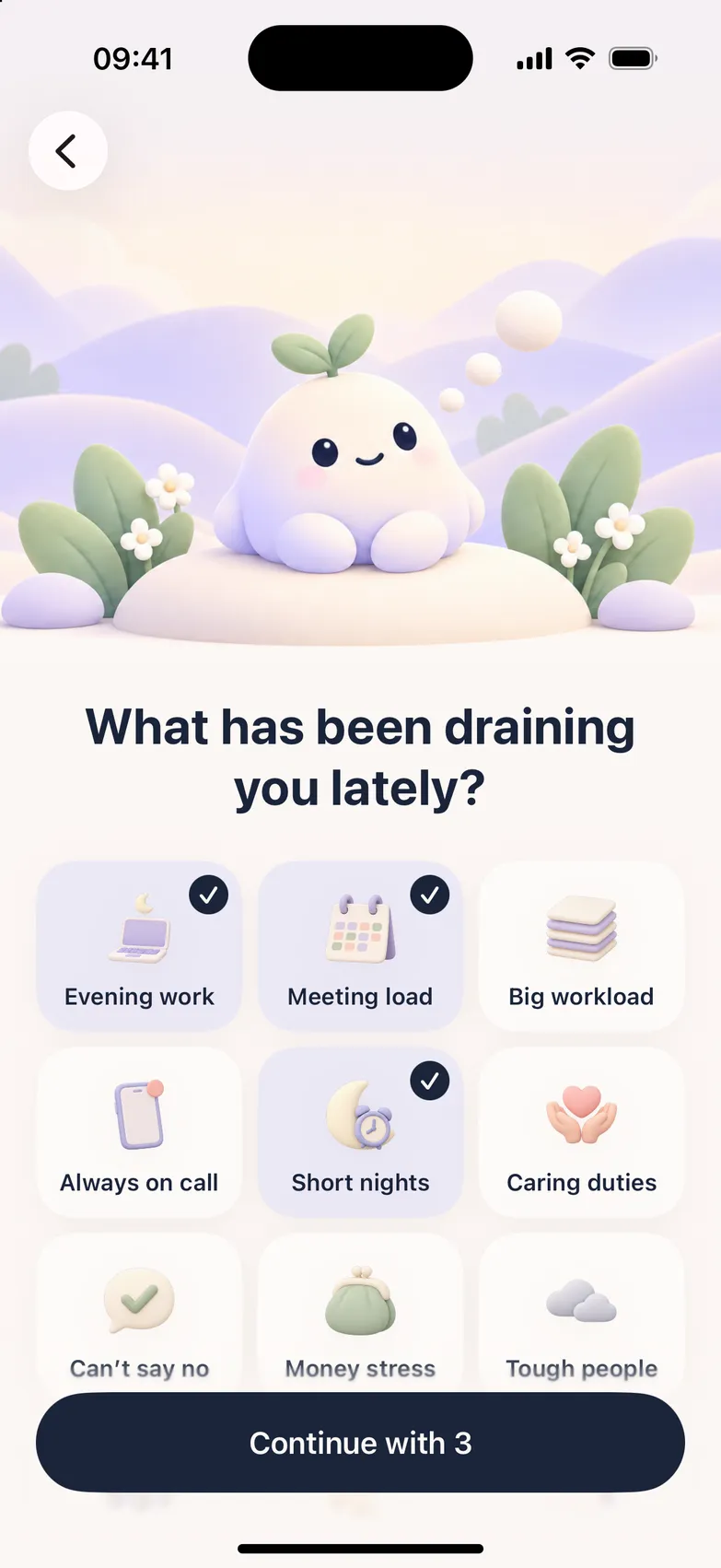
There’s no tour. Omi asks what has been draining you lately, as twelve clay tiles with names short enough to fit one line, then how your energy has been, and ends on your first change, already sized to that answer. Say your energy has been low and the laptop change becomes weekdays only, at 20:00 instead of 19:00. Nothing asks for the keyboard until you want to talk.
The check-in is a single pill. Drag it and the level’s colour rises from the bottom while the name above it rolls over like a number; pull past the top and it stretches like a rubber band, then springs back when you let go. Omi changes face with every level. I recorded it side by side with the State of Mind logger in Apple Health and reworked it until it moved like the system’s own.
On a good morning the next question slides in over it: did last night’s change hold?
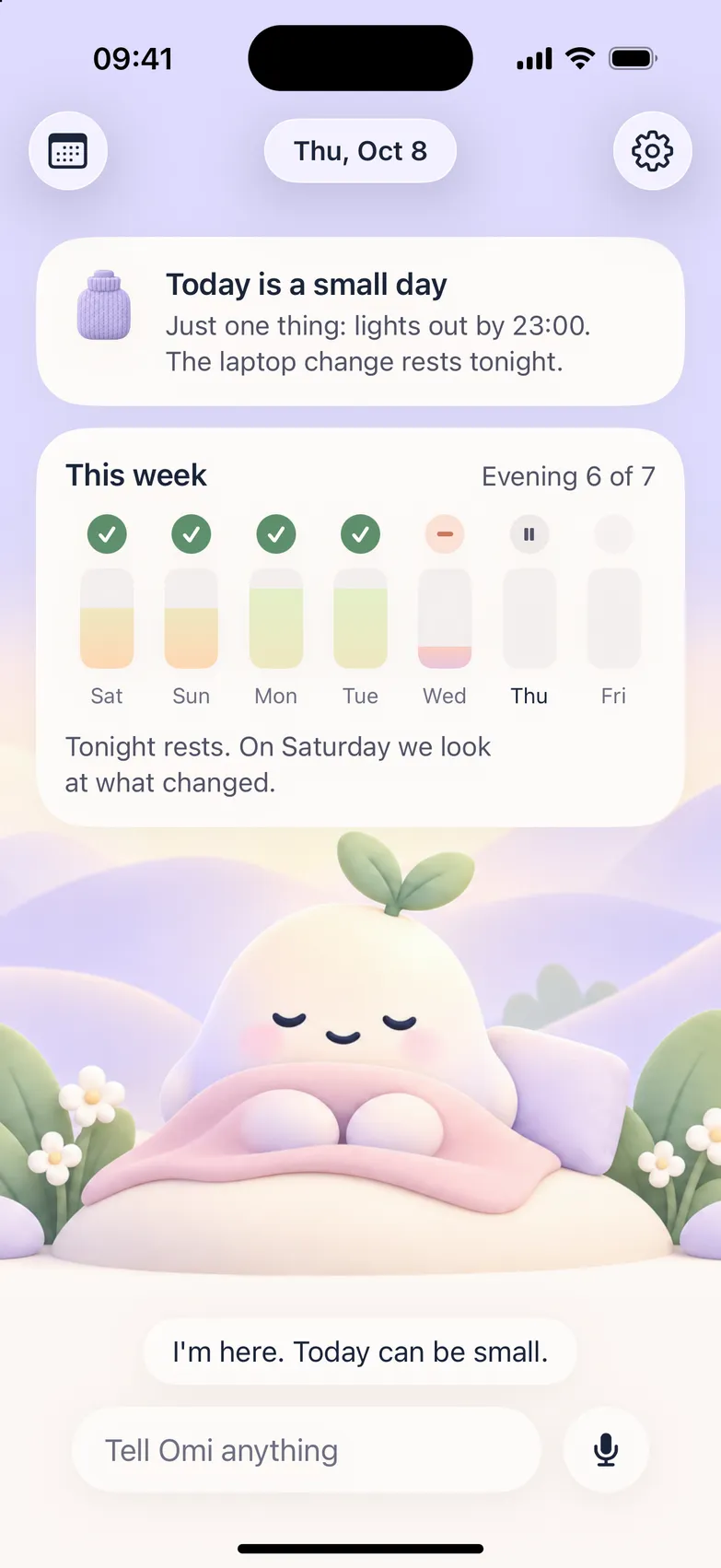
Early builds showed your level back to you on Home, a big word over a tank of water. I took it out, because your energy isn’t something to look at; Omi only uses it to size the day. A drained morning turns Home into a small day with one anchor, lights out by 23:00, while the change rests without guilt and Omi sleeps under a blanket.
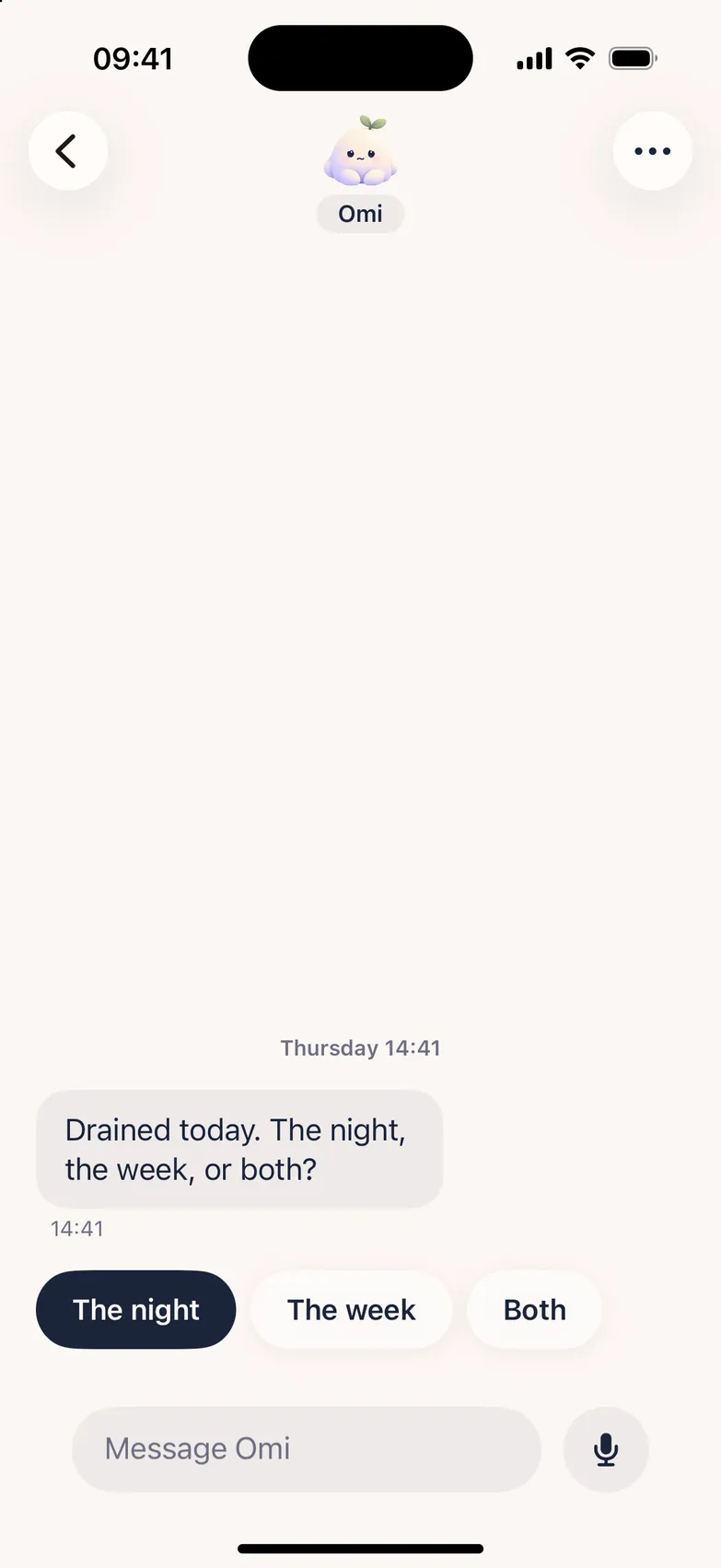
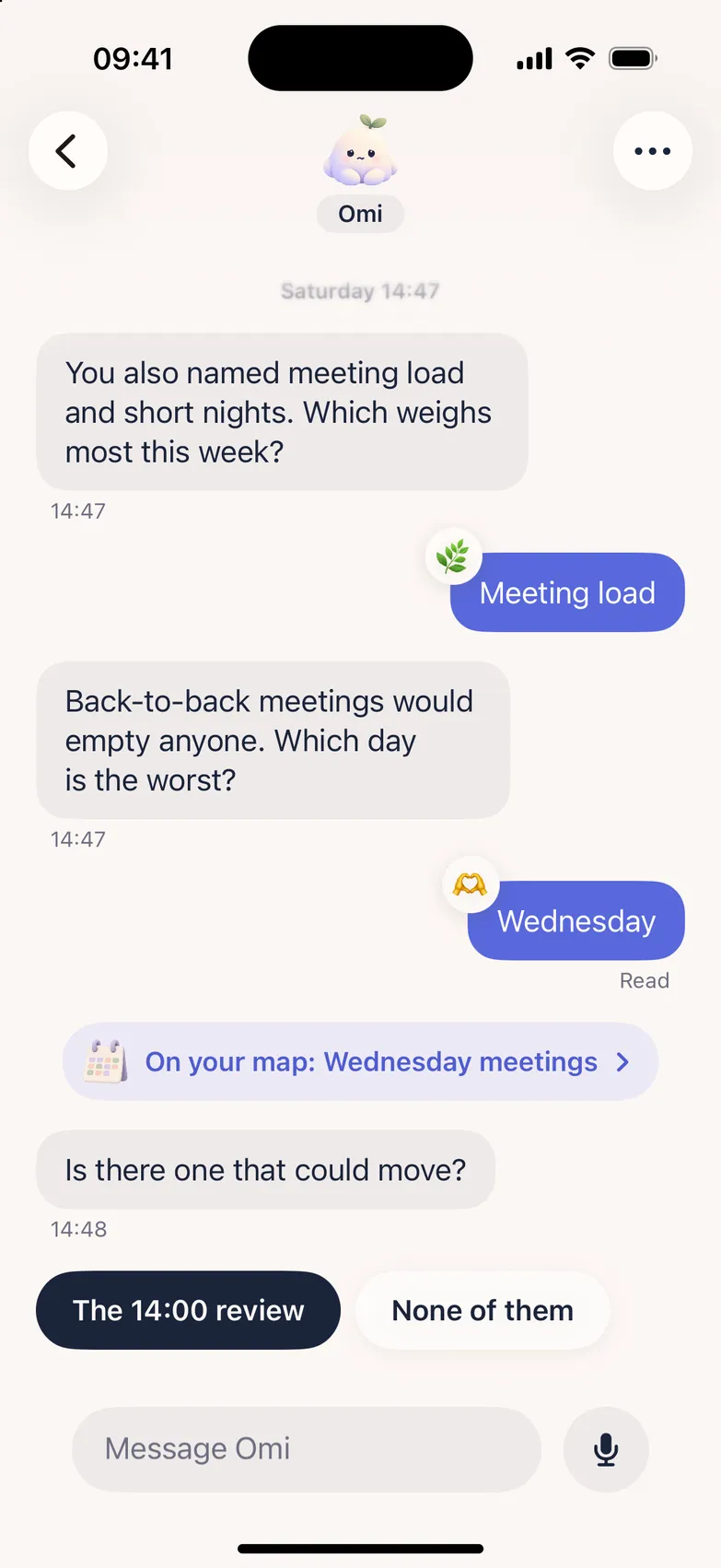
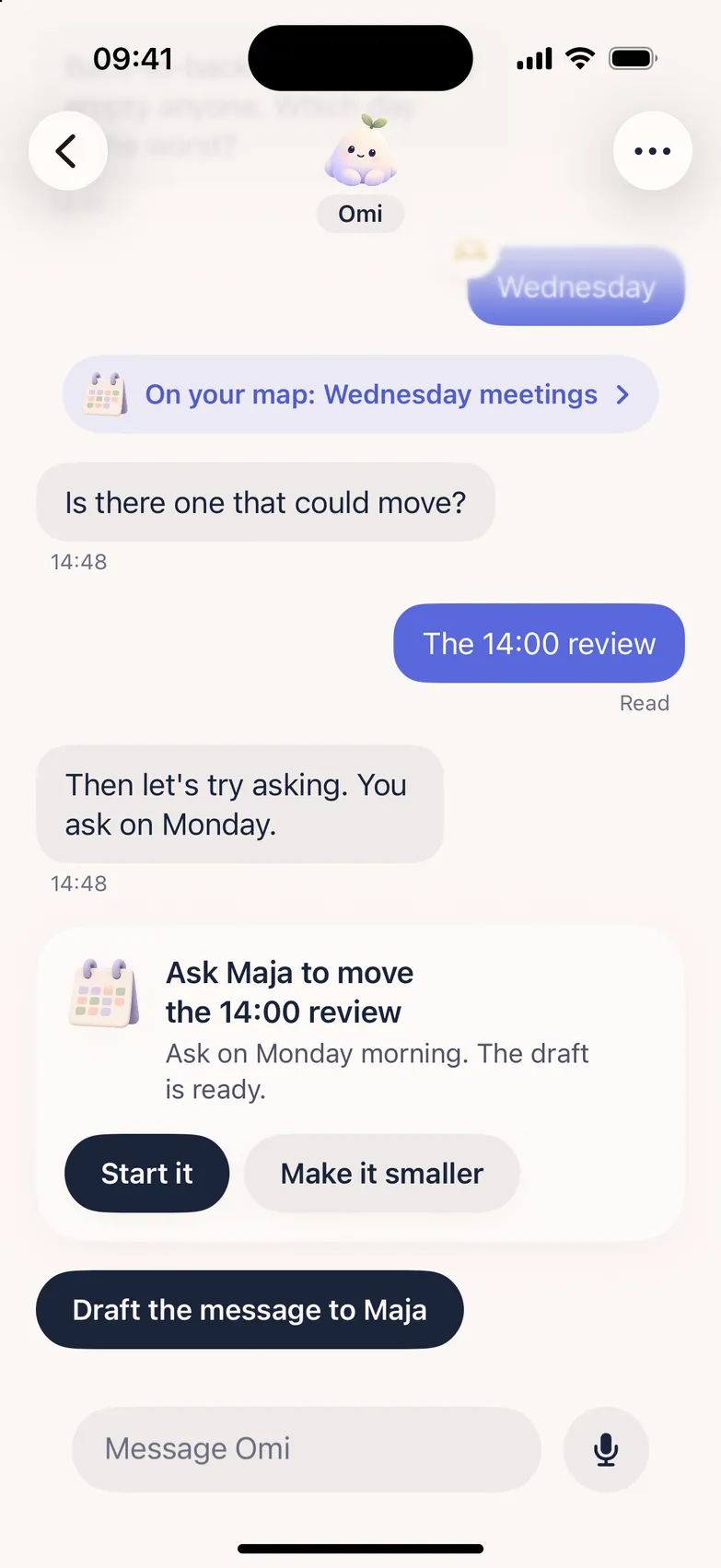
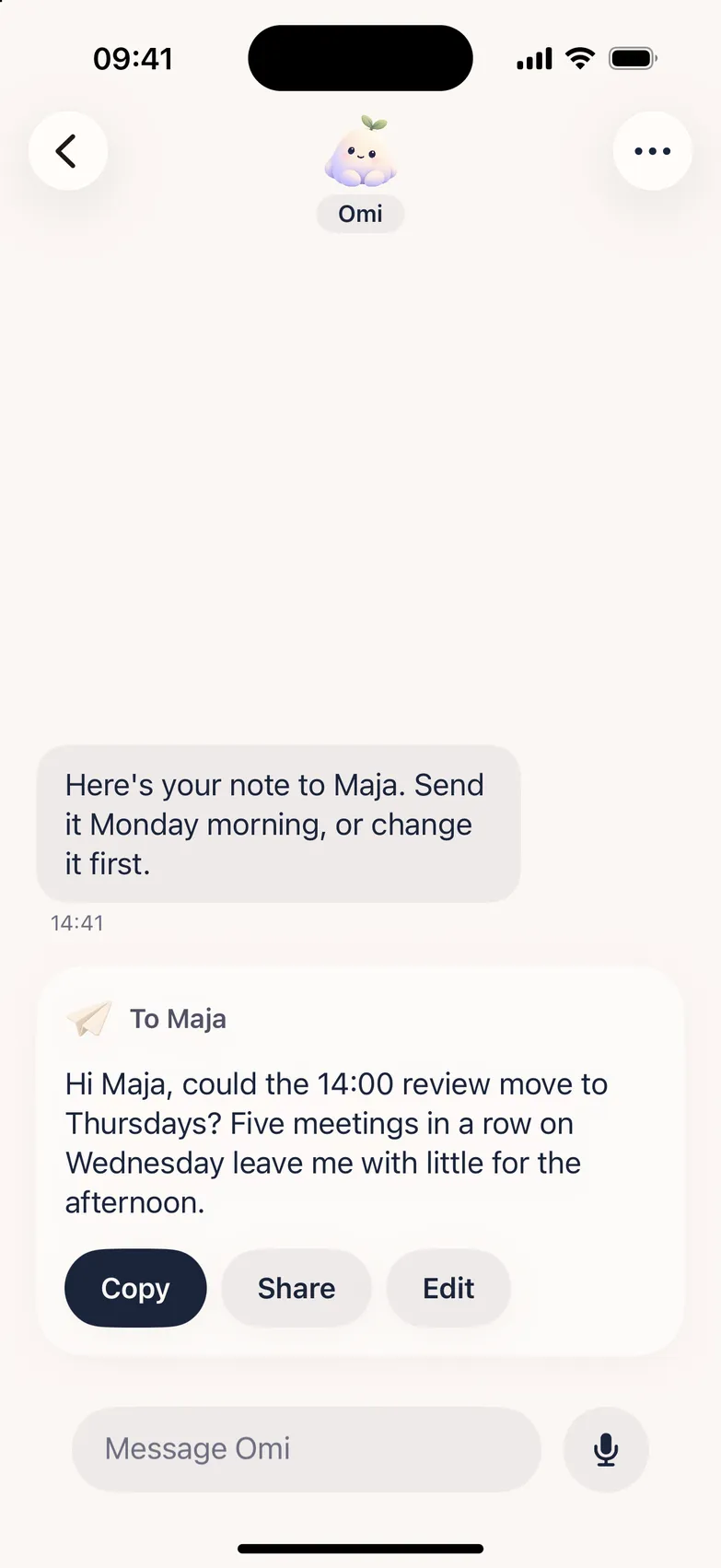
A talk with Omi never ends on sympathy alone. It ends in something you can point to: a drain added to your map, a change you can start or make smaller, or a draft of the message you’ve been avoiding. In this one, meetings came up, Wednesday was the worst day and the 14:00 review could move, so the change is asking Maja to move it, with the message already written. Omi never sends anything itself.
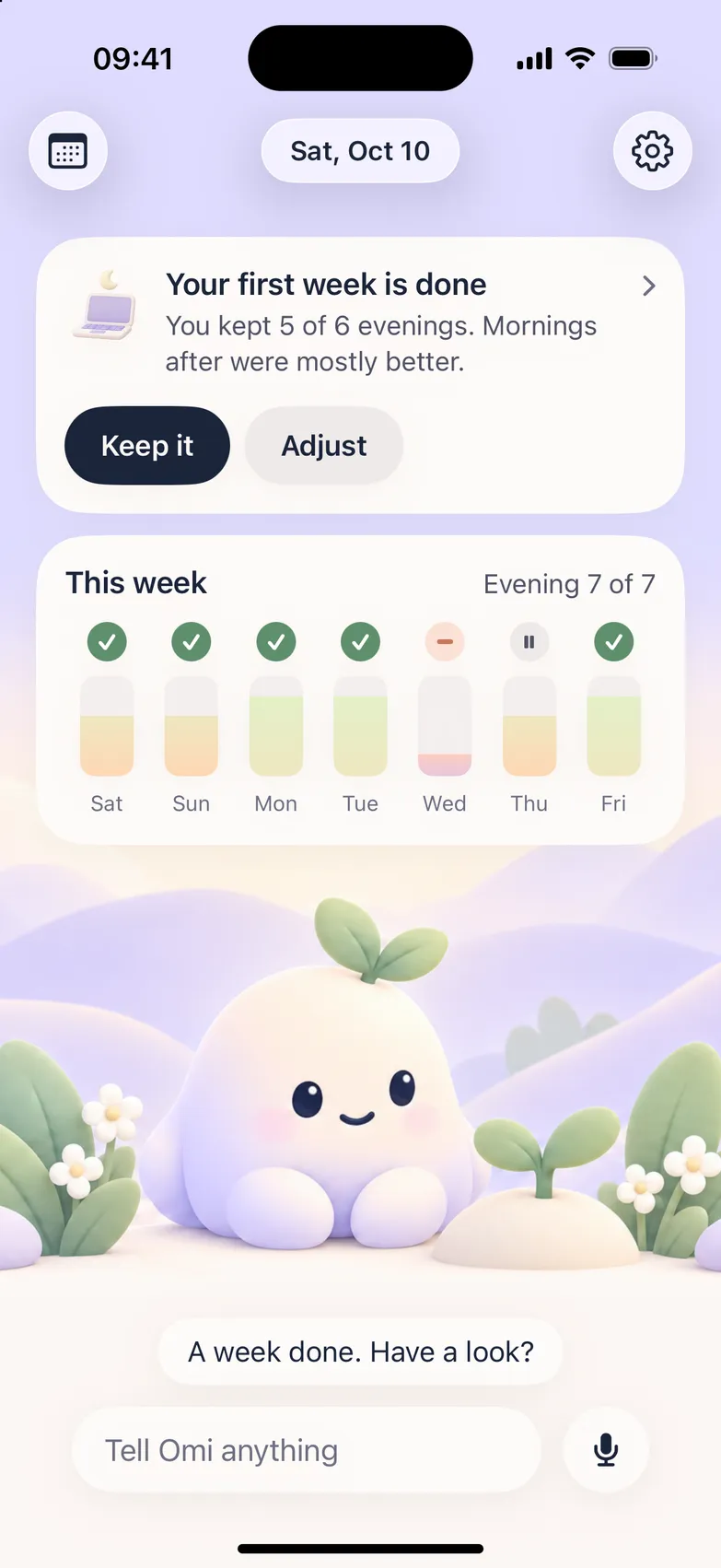
After seven evenings Omi lays the kept ones beside the mornings after, in your own counts and careful words: kept 5 of 6, the mornings after were mostly better, too few days to be sure. Then you keep it, adjust it or go looking for the next one. Patterns sits behind the calendar for the longer view, and Home never turns into a dashboard.
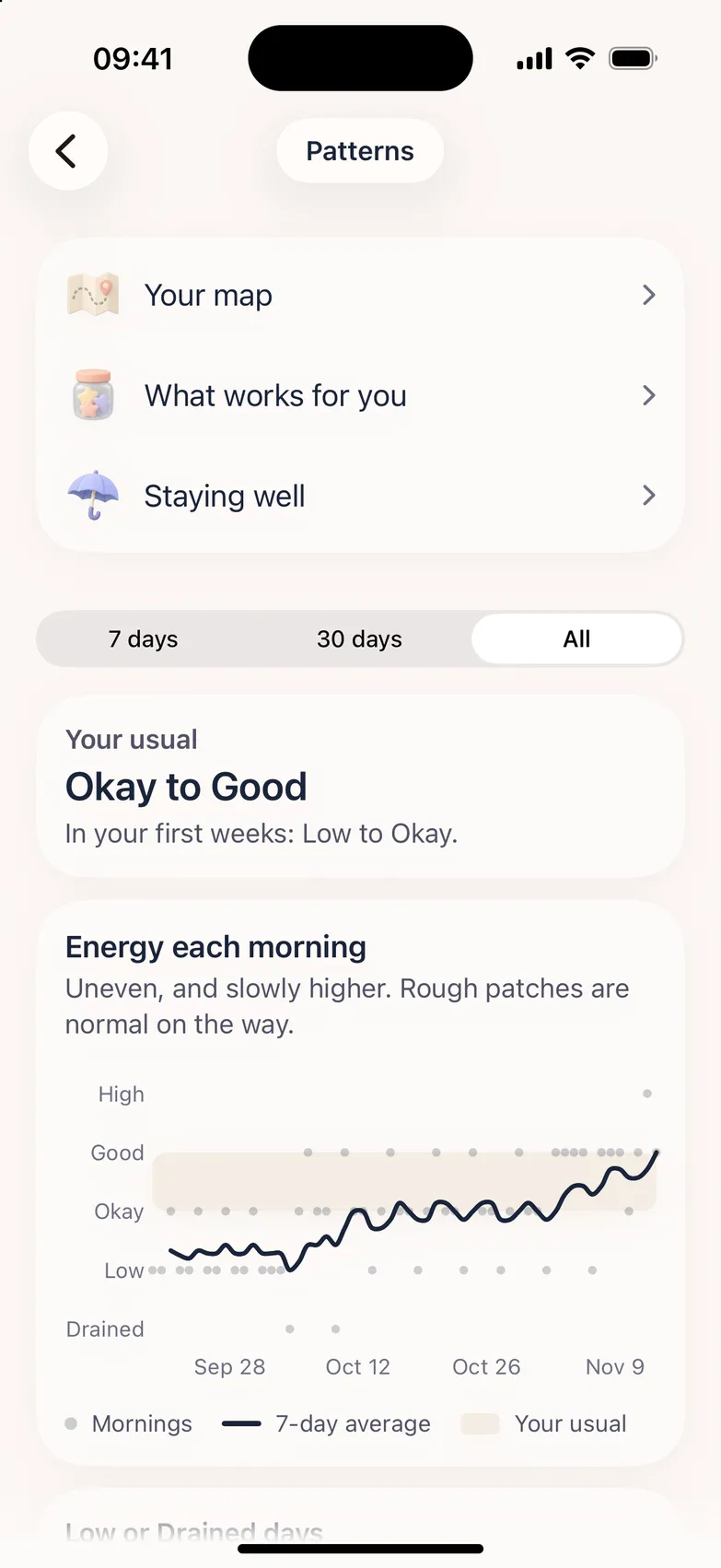
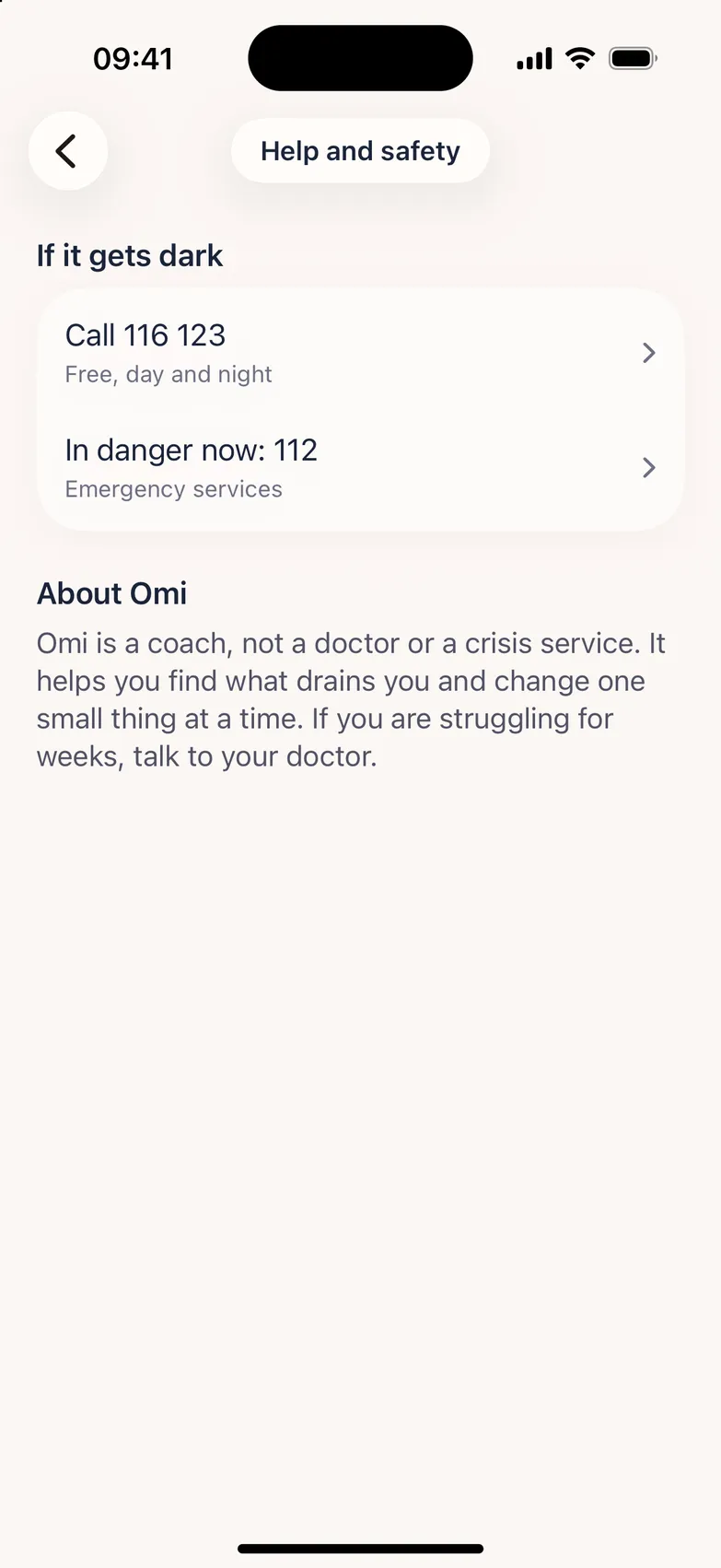
Burnout can last years, so Omi plans for both directions. When things hold, the changes that worked turn into a staying-well plan with your early signs in your own words. When low days run for about three weeks, Home leads with a card that says so and offers to help you write to someone. Risk language in a talk goes straight to a safety flow with real numbers to call, and the app says plainly what it is: a coach, not a doctor or a crisis service.
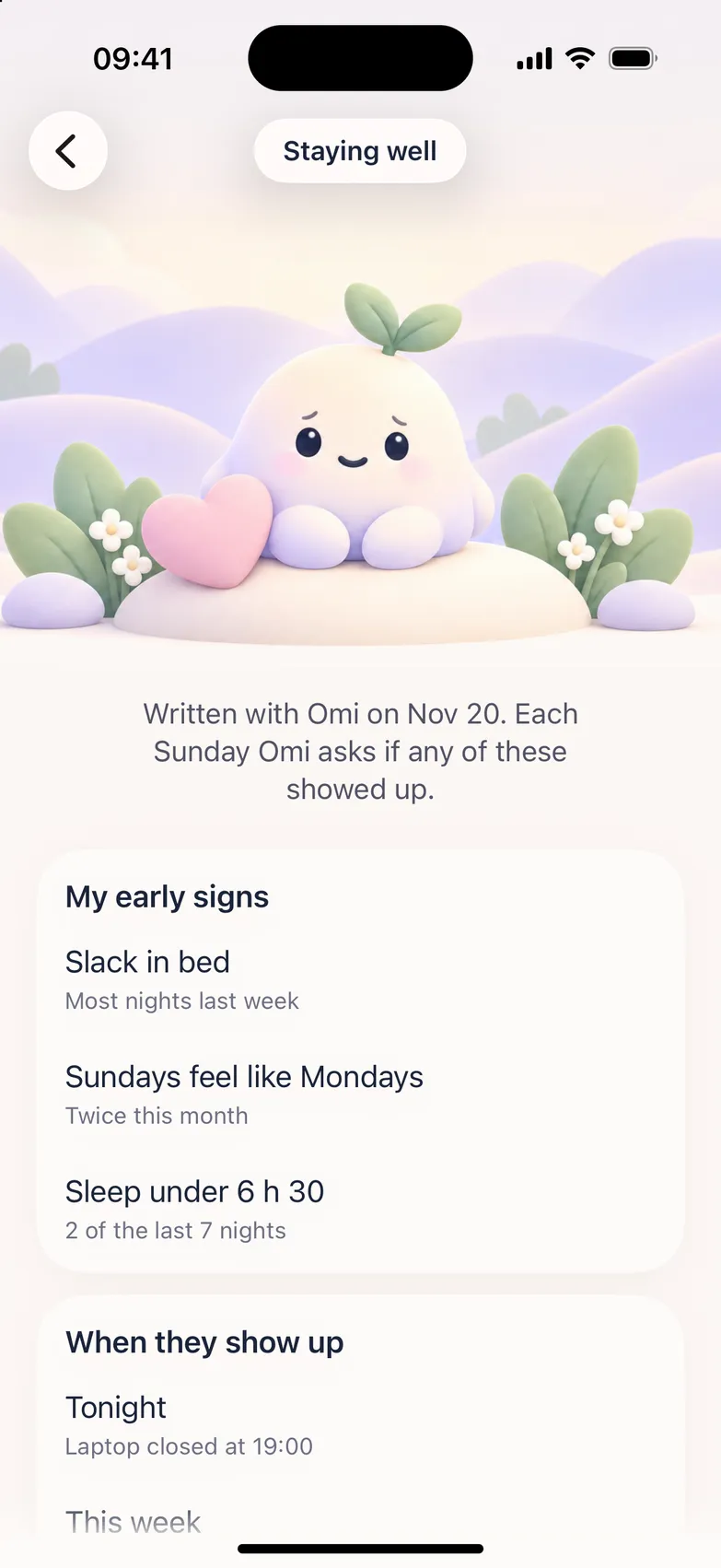
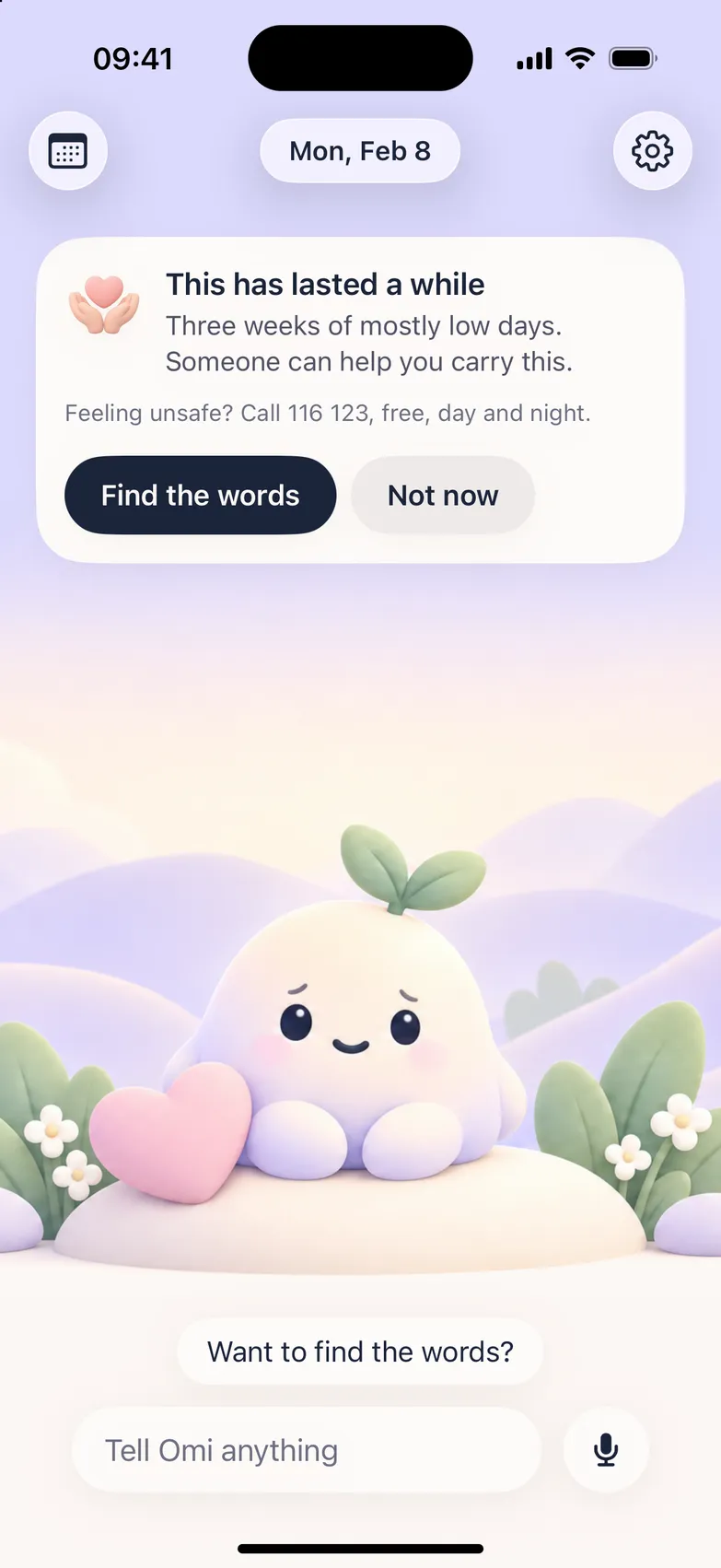
Omi is a soft clay cloud with a leaf on top. Every render starts from the same master image and gets checked against the turnaround, so it stays one character across scenes.

Each scene says what its step is about: a sunrise when Omi asks about last night, a blanket on a small day, a heart when it’s been hard for a while. Its face does the rest, following your level on the check-in and the mood of a talk.

Omi follows the phone’s appearance. The clay scenes for night come next; until then Omi sits on the dark ground on its own.
I drew the whole flow on a canvas first, at full fidelity, and wrote Swift only once it was approved. Then came the parts a mockup hides: native transitions, haptics that follow one map of what each tap means, every screen at the largest text size and VoiceOver labels that read right. The talks run on a script for now; the real coach model is the next phase, then sign-in and the paywall.
Decisions written down with their reason, from the name to how the pill springs back.
Canvas artboards, each passed by a layout check before any Swift.
UI test flows that walk forward, back, swipe back and relaunch.
Random taps, swipes, drags and keystrokes across eleven states, with nothing broken.
The brief described a tracker. A day of research turned it into a different product, and most screens got simpler because of it.
Showing the level back made Home a scoreboard. Using it only to size the day kept the app about the change.
The check-in pill went through several rounds against Apple’s own logger before it stopped feeling like a prototype.